Why Do Milwaukee Rental Properties Need a Winter Emergency Plan?
Milwaukee's extended cold stretches turn minor maintenance gaps into costly emergencies, from frozen pipes to failed furnaces. A documented plan for winter emergencies protects resident safety and investor NOI before temperatures drop.
That may seem like common knowledge, particularly for Jim Miller, the owner of Performance Asset Management (PAM) and a lifelong resident of southeastern Wisconsin. But he got a reminder of a lifetime during a brutally cold stretch of winter toward the beginning of 2026, when PAM got calls from five different properties in just one afternoon.
Each of the properties reported bursting pipes within the same three-hour window. According to Jim, pipes typically start failing when temperatures drop about five days below 20 degrees. This winter started colder and snowier, reported the Milwaukee Journal Sentinel. By late January, sub-20-degree temps set in. Jim remembers they lasted for about eight days. Not quite a record low, but memorable.
None of the properties that reported issues had problems in the fall, specifically October or November. Nothing was broken, nothing looked risky, and nothing would have shown up on a routine walkthrough. But old pipe insulation, no verified minimum heat setting, and a shutoff valve became a problem after eight days of sub-20-degree temperatures.
PAM logged 47 frozen pipe calls during that winter. Most southeastern Wisconsin property investors know unprepared properties risk frozen pipes, furnace failures, and expensive emergency repairs during cold fronts. Fewer investors know it takes a documented winter plan to prevent five-figure repair bills. Learn four tips to build a plan before winter sets in.
What Causes Pipes to Freeze in Milwaukee Rental Properties?
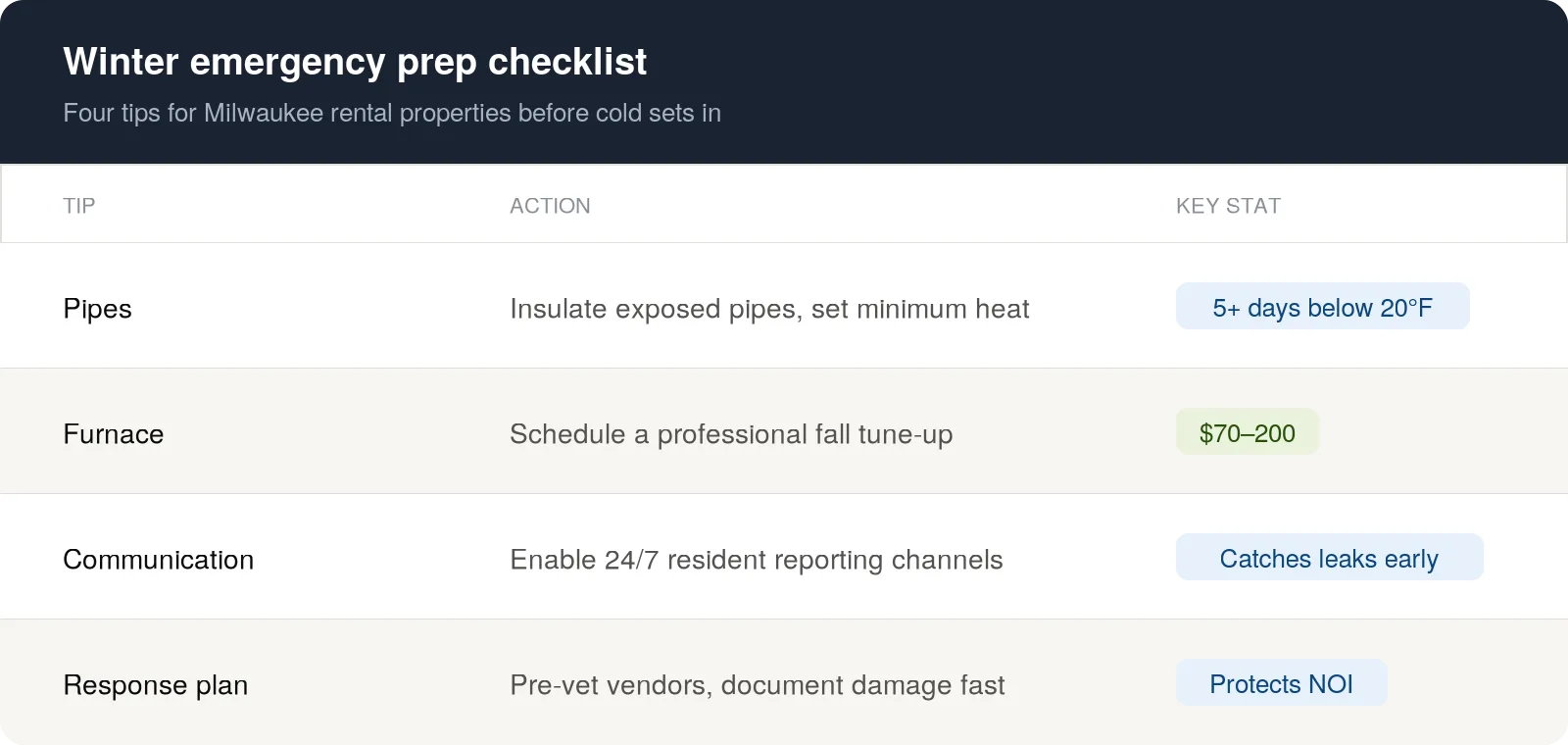
Interior pipes typically start freezing after roughly five consecutive days below 20 degrees Fahrenheit, according to PAM's field experience. Insulating exposed pipes and maintaining minimum indoor heat prevents most winter plumbing emergencies.
Investors can prepare for winter emergencies by insulating exposed pipes in basements, crawl spaces, and exterior-facing walls. Set a minimum thermostat temperature and keep vacant units heated during winter months. Southeastern Wisconsin vacant units are especially vulnerable to frozen pipes during the winter since residents aren’t there to report heating failures in real time.
Share shutoff valve locations with residents and provide instructions in advance. Empowering residents lets them shut off water at the first sign of a leak before it spreads, preventing more serious property damage. A walkthrough before winter costs less than a burst pipe repair bill later, especially when plumbing is treated proactively as a checklist item instead of reactively.
How Often Should a Rental Property Furnace Be Serviced Before Winter?
Furnaces should get a professional tune-up every fall before Milwaukee's cold season sets in. Regular filter changes and airflow checks extend furnace life and reduce the odds of a mid-winter heating failure.
The first day temps fall below 30 degrees in southeastern Wisconsin is when furnaces face the most stress. “Furnaces don’t just fail randomly throughout the winter. They’re most likely to fail on the very first cold snap of the season, when a system that has been sitting idle for months is suddenly asked to run at full capacity for the first time in a while,” wrote Miriam Guthrie, an associate meteorologist at The Weather Channel.
Replace filters to protect airflow and reduce dust buildup. ENERGY STAR recommends checking monthly and changing at least every three months. Confirm central air drain lines route properly to a floor drain versus back into the furnace. This will help avoid water damage, as misrouted lines can flood the furnace cabinet and surrounding floor every time the system runs.
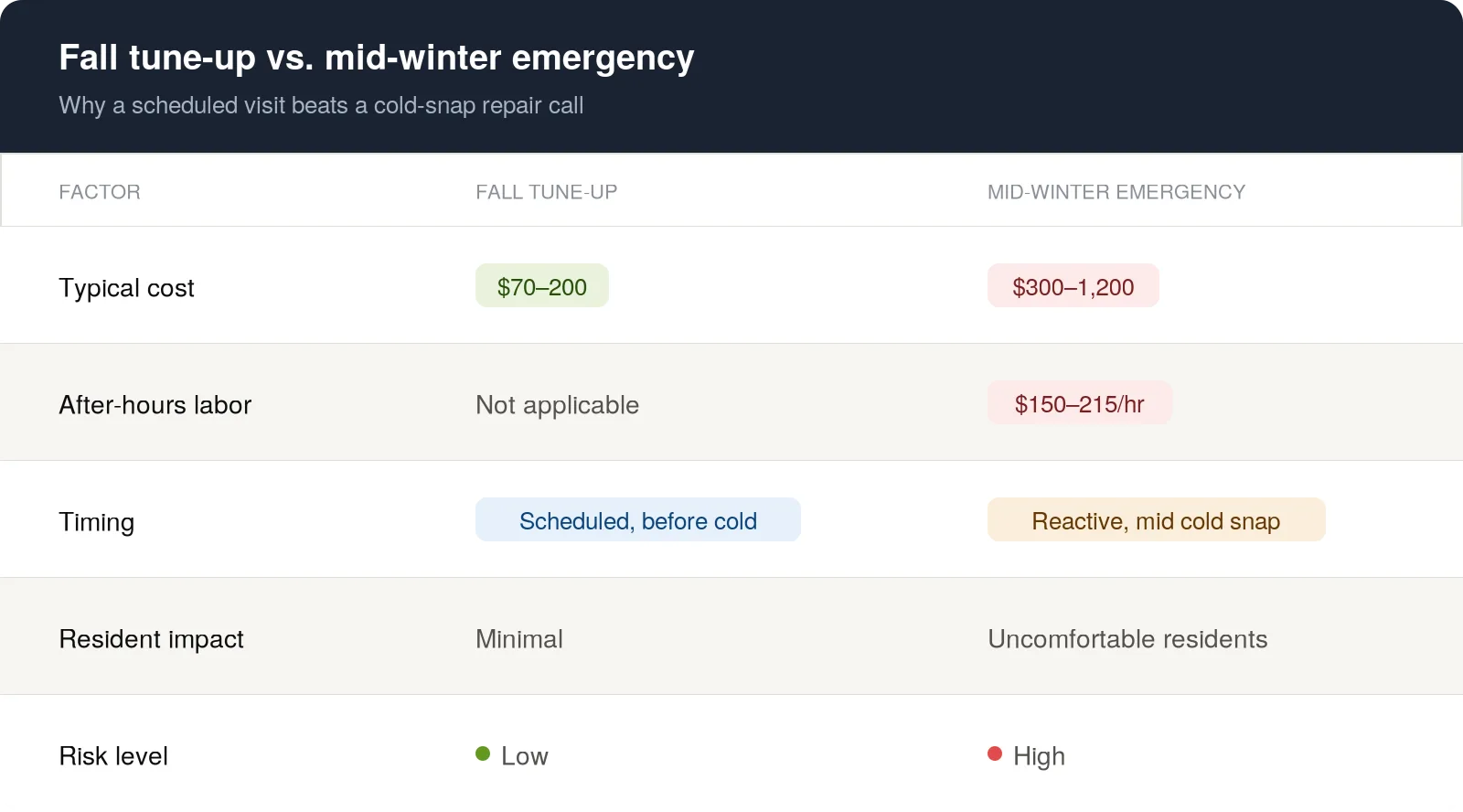
Furnaces near the end of their lifespan need to be identified and replaced before winter starts. Mid-winter failures mean emergency vendor pricing and uncomfortable residents. A fall tune-up typically runs $70 to $200, but a mid-winter breakdown becomes a $300 to $1,200 emergency call, with after-hours labor running $150 to $215 an hour, according to The Weather Channel.
Why Does Fast Resident Communication Matter During a Winter Emergency?
Residents notice a failing furnace or dripping ceiling before anyone else does, so delayed reporting turns a small issue into a major loss. Clear, always-available reporting channels let investors respond before pipes burst.
Because residents are the first line of defense in a winter emergency, delayed reporting during the cold stretches in southeastern Wisconsin can turn a minor problem into a serious issue. Last winter, one of the 47 reported pipe bursts went unreported to PAM until it exploded. Investors can prevent this by establishing 24/7 maintenance channels for residents.
Property owners can encourage residents to report unusual signs like cold spots, malfunctioning furnaces, or no heat before conditions get worse. Slow, unclear reporting processes can mean increased exposure to winter damage. A property manager with a resident maintenance portal can use it to help support active communication, triggering an emergency response.
PAM approaches this challenge by pairing automation with human follow-through. Investors can apply their own pairing of actual people with automated tools. Fast, efficient communication typically isn’t an extra cost. But it can prevent thousands in avoidable winter damage.
What Should Investors Do When a Winter Emergency Damages a Rental Property?
Investors should have vendor relationships and a response plan in place before winter, not after damage occurs. Fast vendor dispatch, clear documentation, and prompt investor communication minimize both repair costs and resident disruption.
Pre-vetting emergency plumbing and HVAC vendors in advance keeps response times short, as it negates the amount of time property owners have to spend searching for a vendor during an active emergency.
If damage happens, document it immediately with photos and timestamps to support insurance claims and cost tracking. Investors working with a property manager should receive transparent updates on what happened, what it costs, and next steps. Some property managers will offer investor portals to help expedite this communication process.
Data from winter emergencies can help investors guide future CapEx planning and inspection scheduling. Each incident should sharpen next year's plan, as a tested emergency response plan protects both property value and resident relationships long-term.
For more information about these four tips and how PAM supports investors by being prepared for winter emergencies, schedule time with Jim.